THE YANG LAB
  • Home
  • Hua Yang
  • Research
    • Alpha therapy
    • Radiolanthanides
    • Er165
  • Publications
  • Group
  • Photos

Radioisotopes for Cancer Diagnosis and Therapy

Picture
Picture
Picture

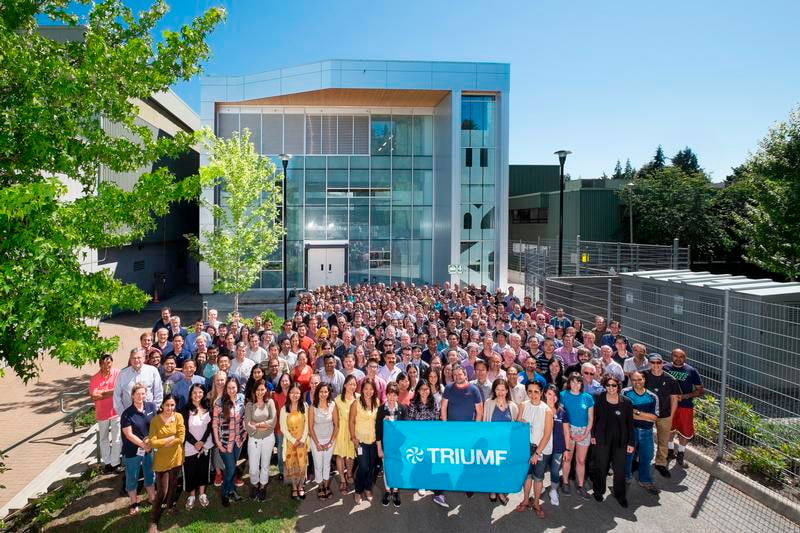
We are a research group in the Life Sciences Division at TRIUMF. We are passionate about using radiopharmaceuticals for the diagnosis and treatment of cancers.

Transforming cancer therapy

We are in the fight against cancer using rare radioisotopes as our weapons. As part of a wider team that includes researchers based in universities and institutions from all over Canada, we are committed in advancing radiopharmaceutical therapy. Our main goal is to advance precision and personalized medicine.

Find out more about the Canadian efforts to improve cancer treatment via radiopharmaceutical treatment
Rare isotopes

Find out more about TRIUMF and our facilities
Discover TRIUMF
Picture
Featured Publications:

L. Wharton, S. W. McNeil, H. Meeres; D. Zhang, A. Ingham, H. Merkens, M. Osooly, C. Rodríguez-Rodríguez, F. Bénard, H. Yang. Chelating [227Th]Th4+ for Peptide Receptor Radionuclide Therapy of Neuroendocrine Tumors. Bioconjugate. Chem. 2025, 36, 6, 1273. (Invited feature at Front Cover)

Targeted alpha therapy (TAT) has shown high promise for the effective treatment of advanced stage cancers. Of the proposed radionuclides for TAT, Thorium-227 represents an interesting candidate given its relatively long half-life, 18.7 days, and the cascade of short-lived, high-potency, alpha-emitting daughter progeny in its decay scheme. However, to date few chelators exist which can effectively and stably bind [227Th]Th4+ at molar activities high enough for TAT. To address this challenge, this study investigated various chelating ligands for coordination of [227Th]Th4+. H4noneunpaX was identified as a promising chelator, demonstrating radiolabeling with [227Th]Th4+ at concentrations of 10–6 M (Am = 272 kBq/nmol). In this study, we also investigate for the first time the pairing of Th-227 with a peptide-based bioconjugate and evaluate the in vivo biodistribution characteristics. The 227Th-labeled radiopeptide showed high uptake in tumors (25.8±6.2 %IA/g at 3 h p.i.) and low uptake in non-targeted organs. Although some release of Th-227 was noted in serum stability studies this was not observed in vivo. Overall, this study demonstrated for the first time the viability of using peptide-based targeting to effectively deliver Th-227 to tumor sites.


Picture
  B. Saeedi, C. Rodriguez-Rodriguez, P. L. Esquinas, H. Merkens, F. Benard, V. Radchenko, H. Yang, First preclinical SPECT/CT imaging and biodistribution of [165Er]ErCl3 and [165Er]Er-PSMA-617. EJNMMI Radiopharm Chem. 2024, 9(1):90 (This work won Society of Nuclear Medicine and Molecular Imaging Young Investigator’s award).

 
165Er (t1/2 = 10.4 h, Ex-ray = 47.1 keV (59.4%) and 54.3 keV (14.3%)) is a promising radionuclide suitable for targeted Auger electron therapy of cancer. 165Er can be produced at a relatively low cost, high yield, and high purity using small medical cyclotrons. As a late lanthanide, 165Er is easy to label and can be used as a surrogate for other lanthanides or Ac in proof-of-concept studies. In this report, we explore the radiochemistry, in vitro, and in vivo behavior of [165Er]ErCl3 and [165Er]Er-PSMA-617 to showcase the application of this radionuclide. Particularly, we report the first phantom and preclinical SPECT imaging of this radionuclide leveraging its characteristic X-ray photon emissions.


Picture
L. Wharton, S.W. McNeil, C. Zhang, G. Engudar, M. Van de Voorde, J. Zeisler, H. Koniar, S. Sekar, Z.Yuan, P. Schaffer, V. Radchenko, M. Ooms, P. Kunz, F. Bénard, H. Yang, Preclinical evaluation of MC1R targeting theranostic pair [155Tb]Tb-crown-αMSH and [161Tb]Tb-crown-αMSH. Nuclear Medicine and Biology. 2024, 108925, 136-137 (This work won Nuclear Medicine and Biology Award).

Targeted radionuclide therapy is established as a highly effective strategy for the treatment of metastatic tumors; however, the co-development of suitable imaging companions to therapy remains significant challenge. Theranostic isotopes of terbium (149Tb, 152Tb, 155Tb, 161Tb) have the potential to provide chemically identical radionuclidic pairs, which collectively encompass all modes of nuclear decay relevant to nuclear medicine. Herein, we report the first radiochemistry and preclinical studies involving 155Tb- and 161Tb-labeled crown-αMSH, a small peptide-based bioconjugate suitable for targeting melanoma.


Picture
S. W. McNeil, M. Van de Voorde, C. Zhang, M. Ooms, F. Bénard, V. Radchenko, H. Yang, A simple and automated method for 161Tb purification and ICP-MS analysis of 161Tb, EJNMMI Radiopharm. Chem. 2022 71 2022, 7, 1–17 (COOP student project).

161Tb is a radiolanthanide with the potential to replace 177Lu in targeted radionuclide therapy. 161Tb is produced via the neutron irradiation of [160Gd]Gd2O3 targets, and must be purified from 160Gd and the decay product 161Dy prior to use. Established purification methods require complex conditions or high-pressure ion chromatography (HPIC) which are inconvenient to introduce in a broad user community. In this study, 161Tb was successfully purified by a semi-automated TRASIS system using a combination of TrisKem extraction resins. The resulting product performed well in radiolabelling and in vivo experiments. An ICP-MS method to analyze the radioactive product was developed. Combined with gamma spectroscopy, this method allows the purity of 161Tb being assessed before the decay of the product, providing a useful tool for quality control.


TRIUMF is a research institute and a hub for medical isotopes in Canada, located on UBC campus on the traditional, ancestral, and unceded territory of the xʷməθkʷəy̓əm (Musqueam) people

4004 Wesbrook Mall          Vancouver, BC, Canada V6T 2A3          (604)222-1047

Powered by Create your own unique website with customizable templates.
  • Home
  • Hua Yang
  • Research
    • Alpha therapy
    • Radiolanthanides
    • Er165
  • Publications
  • Group
  • Photos